
At Tulane Law, the Coast Becomes the Classroom
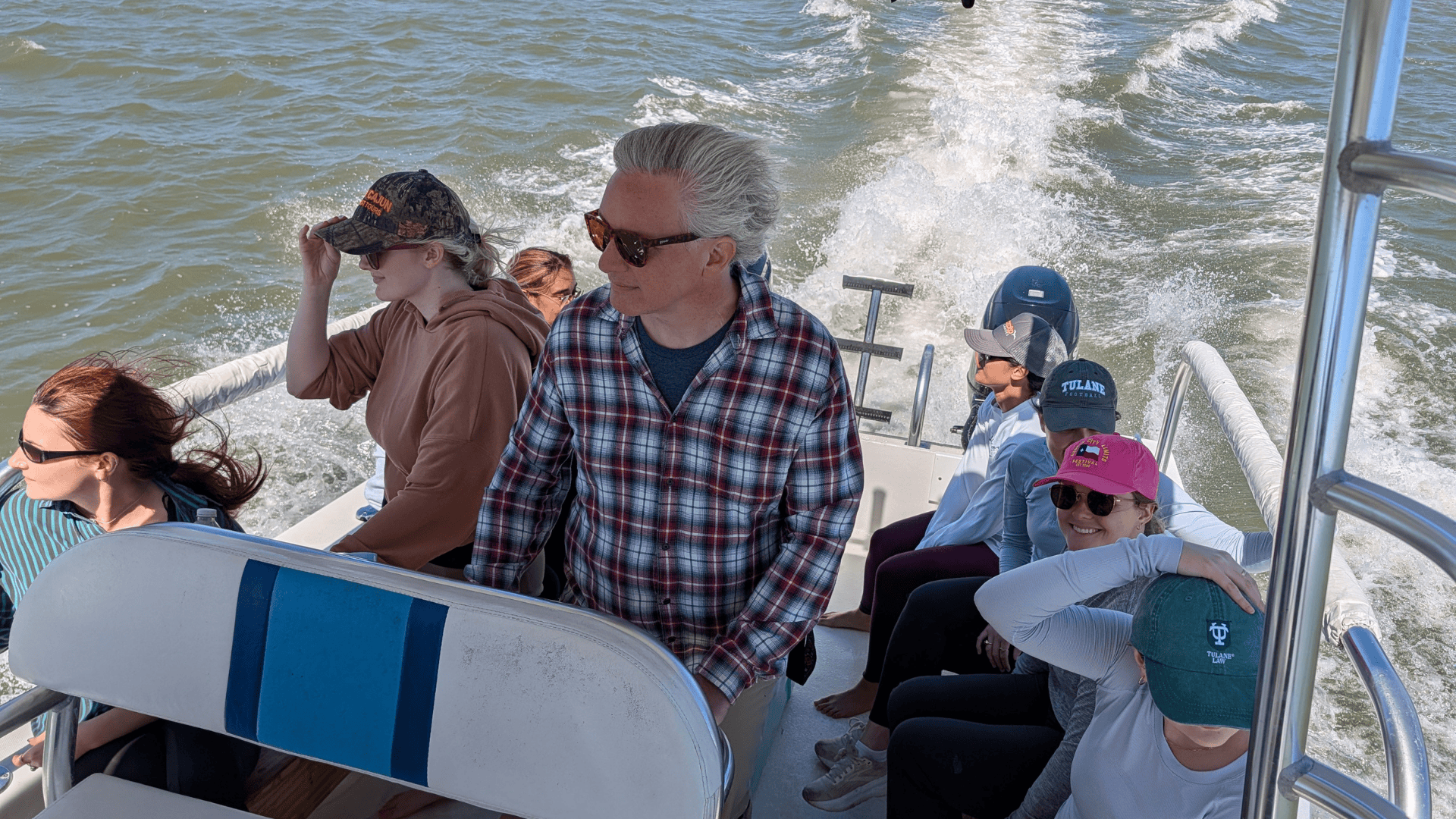
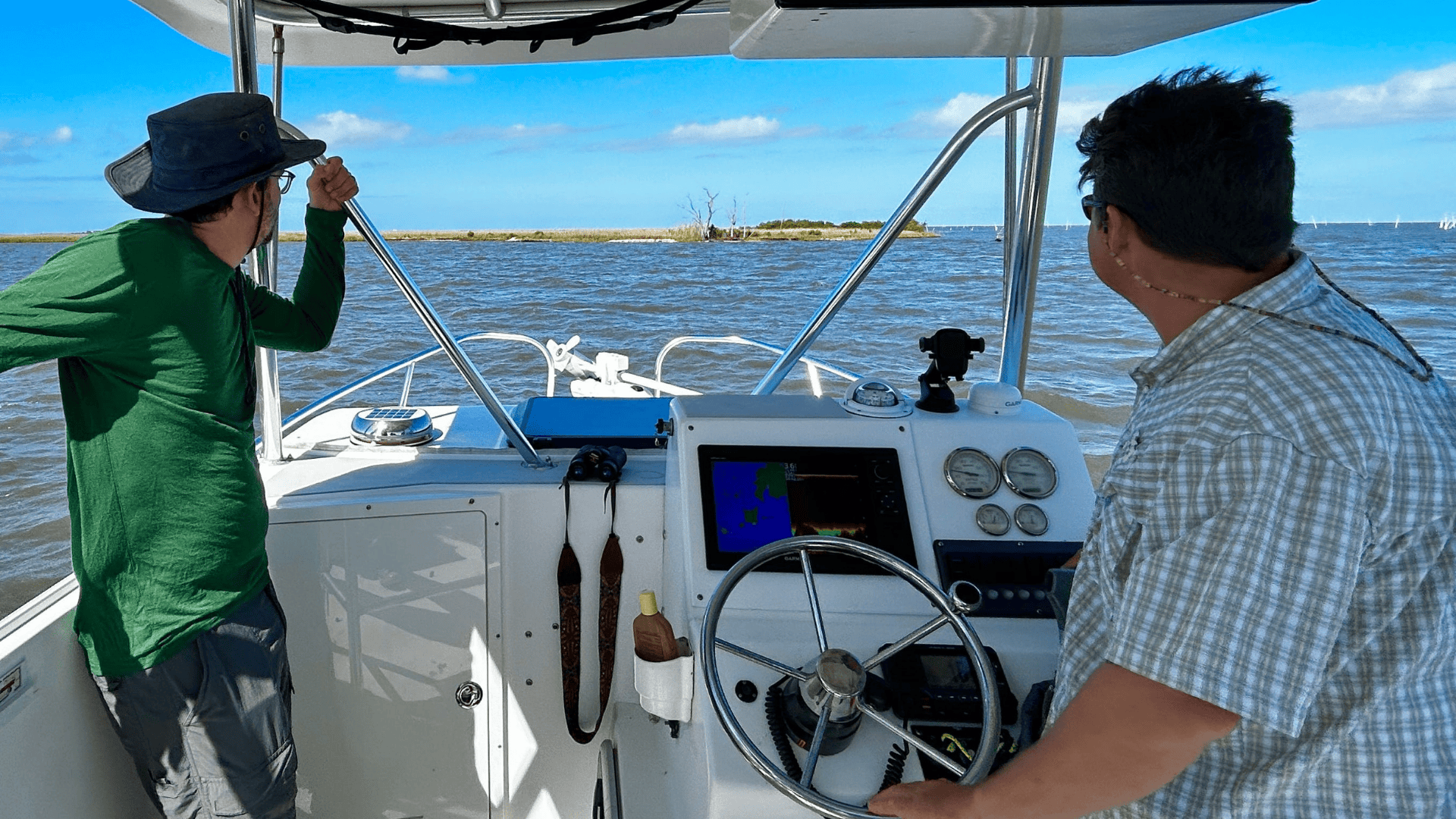
For students enrolled in the Coastal and Wetlands Law Seminar, the classroom extends far beyond Weinmann Hall. This spring, some of the most impactful lessons took place in Louisiana’s wetlands.
The course is co-taught by Chris Dalbom (L ‘12), director of the Tulane Institute on Water Resources Law & Policy, along with Bessie Daschbach (L ’01) and Tad Bartlett (L ’00). Bartlett describes the seminar as “an exploration of liminal spaces in the law —laws bordering property law, contract law, tort duties, insurance law, market-based regulation, constitutional law, and, of course, the ancient and abiding public trust.” He adds that the wetlands are the “ultimate liminal space,” existing at the shifting boundary between land and sea.
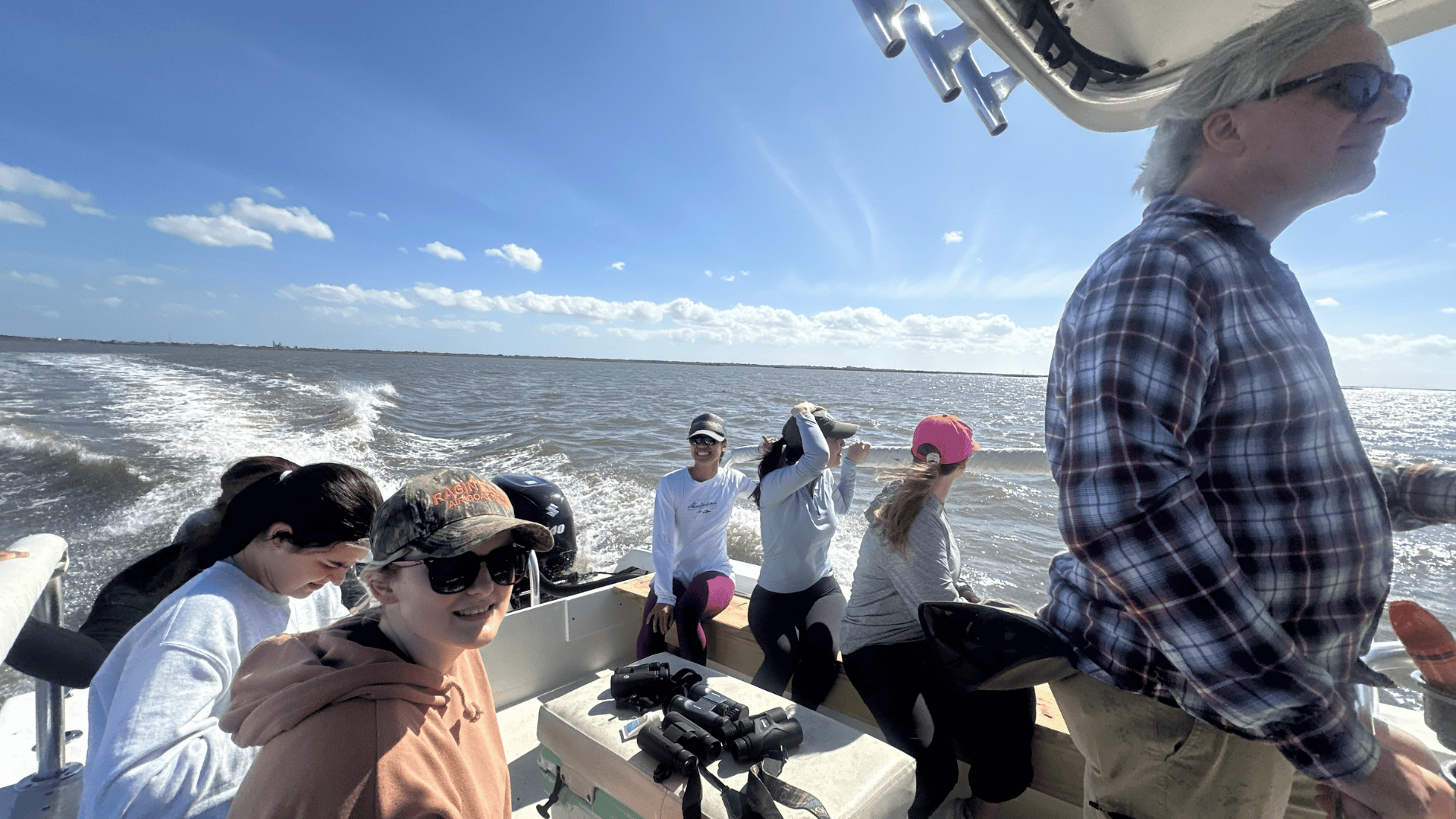
The annual field trip series is designed to connect legal theory with the realities of Louisiana’s rapidly changing coast. This semester, students and instructors traveled by boat through wetlands stretching from the west bank of the Mississippi River to the Gulf of Mexico, guided by longtime wetlands expert Richie Blank.
Blank, founder of Delta Discovery Tours, has spent his life studying Louisiana’s wetlands and has led thousands of visitors through the region. For him, education is central to preservation. “Education is the single most effective tool in keeping the Mississippi River Delta functioning,” he said.
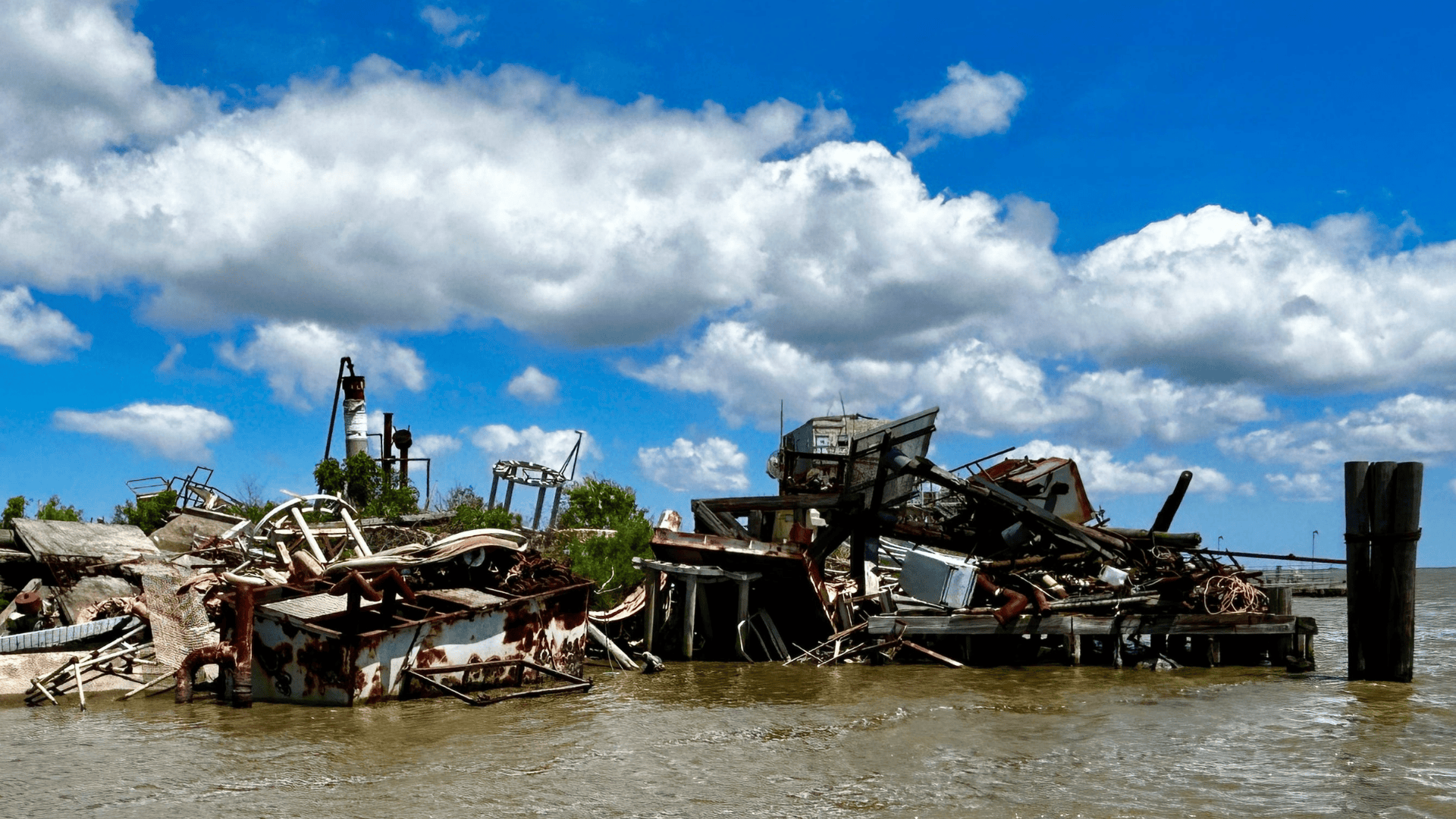
On the tour, students observed areas where wetlands have eroded into open water, as well as abandoned pipeline canals and oilfield infrastructure left behind.
“In class, we discussed abandoned oil wells and how they are growing in number,” said Julia Bursby, a second-year law student. “While doing a full 360 on the boat, we counted almost 50 oil wells in our vicinity. Just seeing how much of the equipment was left with no regard for cleanup was eye-opening.”
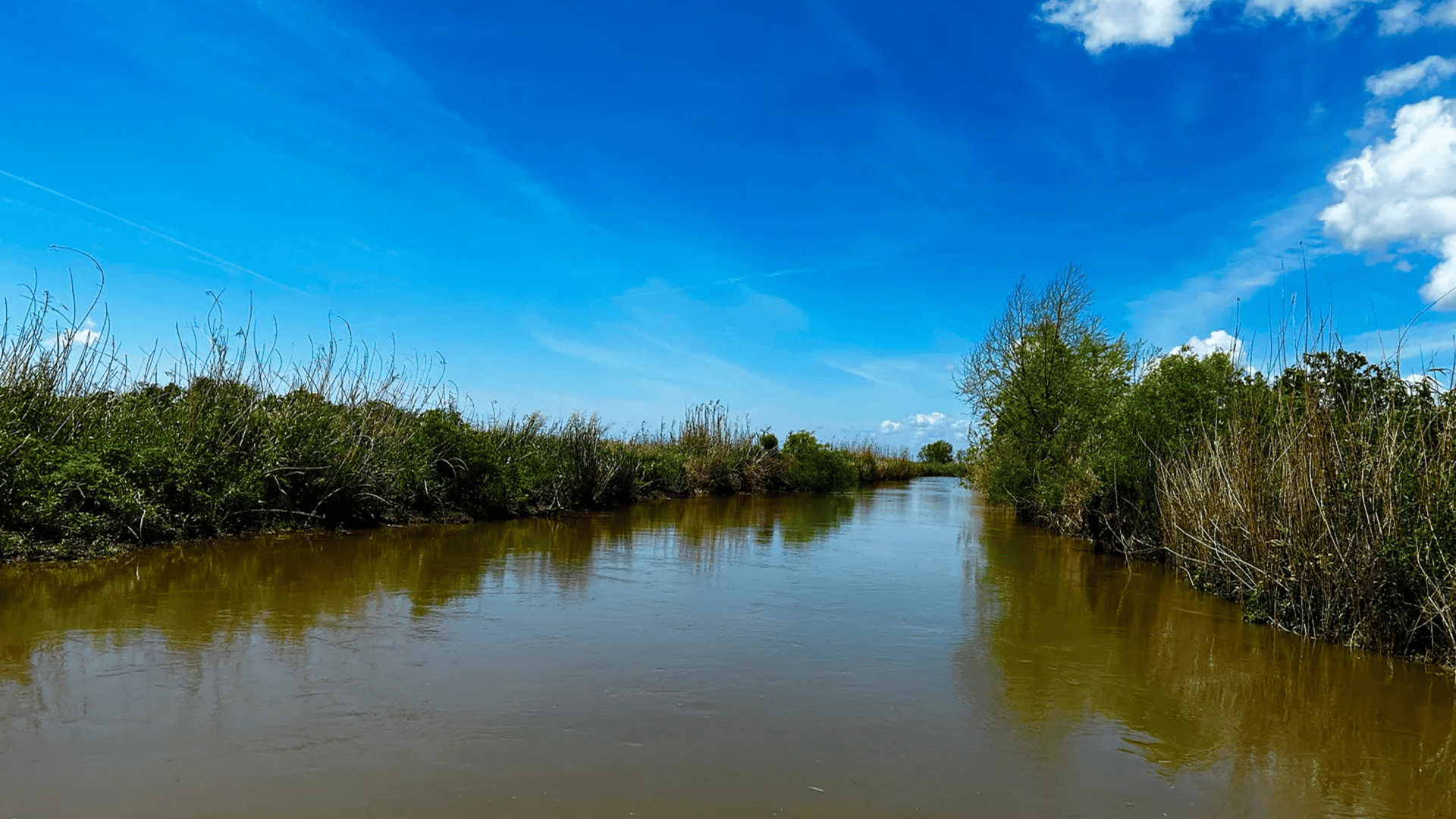
But the trip also highlighted resilience and restoration. Students visited areas protected by innovative strategies, including living shoreline projects that use oyster shells to reduce erosion. Near Quarantine Bay, they saw healthier marshland sustained by sediment-rich water flowing through Neptune Pass, offering a glimpse of how the river can help rebuild the delta.
While witnessing wetland loss was sobering, moments of natural recovery offered a sense of possibility. “There were so many birds and even cows in the newer delta areas,” said Elle Young, a third-year law student. “That made it very clear how nature can rebound when human interference is reduced.”
By bridging theory and reality, the seminar prepares our students for the complexities they’ll face as future lawyers navigating environmental law.